


Every homemaker wants a practical and attractive kitchen sink, whether for washing dishes every day, cleaning fruits and vegetables, or handling other kitchen tasks. With so many kitchen sink designs and materials available, many people ask: how do I choose a kitchen sink that suits my needs?
How do you choose a suitable kitchen sink design?
Kitchen sink designs are varied, and each one suits different needs. Here are five of the most common kitchen sink designs:
1. Drop-in kitchen sink
This sink does not fully blend into the countertop material and is often made from a different material. An opening is cut into the countertop, and the sink is installed from above so that the edges remain visible. This sink is affordable and easy to install, but the raised edges can prevent you from sweeping water directly into the sink and may also affect the overall look.
2. Undermount kitchen sink
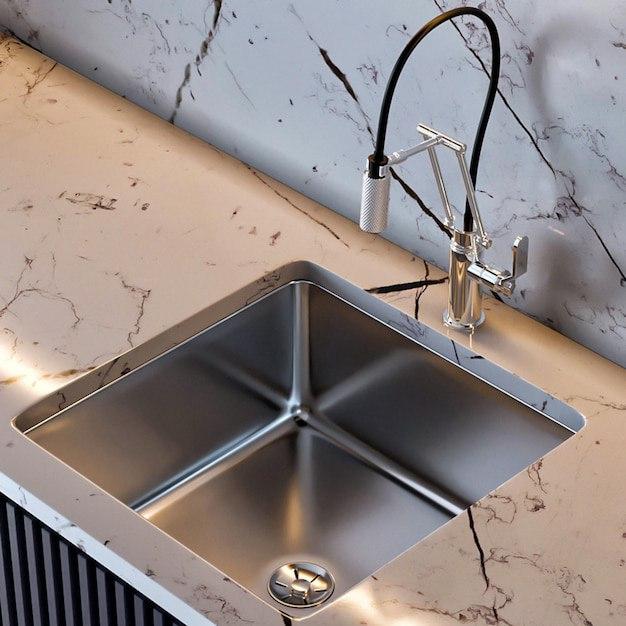
This is the opposite of a drop-in sink. It is installed beneath the countertop without raised edges, which means fewer edges to clean and a practical, elegant design.
3. Farmhouse sink
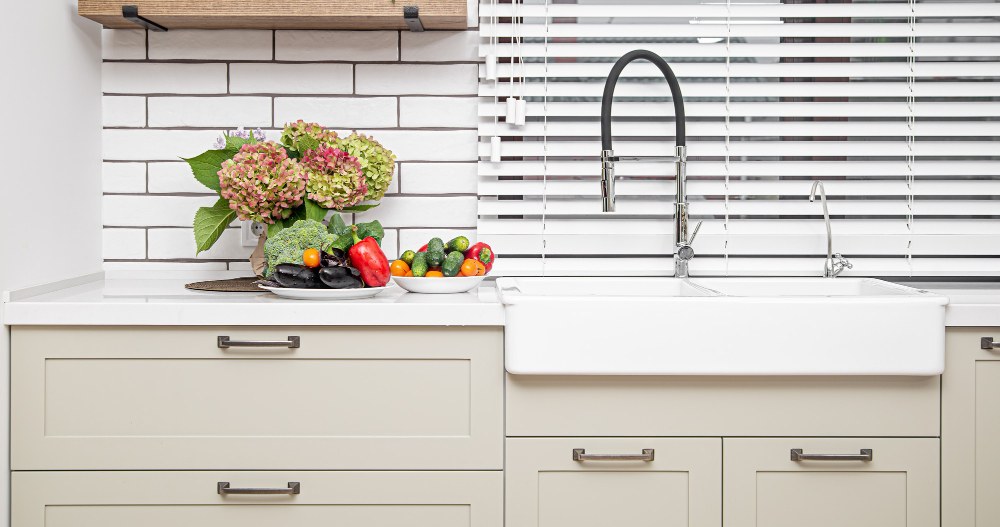
This sink gets its name from its popularity in country homes. It is a large, durable sink installed within the cabinet space, making kitchen tools easy to reach while working. It can be used to wash large items such as baking tools and large vegetable baskets, which is what it was originally designed for.
4. Single-bowl sink
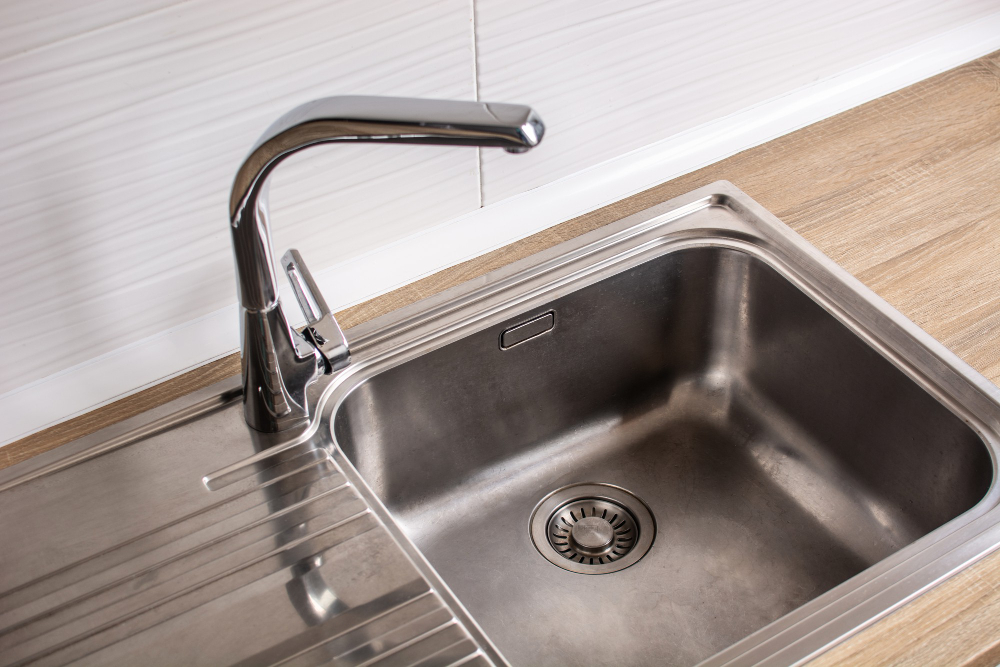
These sinks are known for their large size. You get one basin for personal use, dishwashing, large pots, and heavy kitchen tools such as meat grinders and large pans. On the other hand, this sink takes up a large amount of countertop space, and you may not have another place to wash fruits, vegetables, or small dishes while the basin is filled with water and items that need cleaning.
5. Double-bowl sink
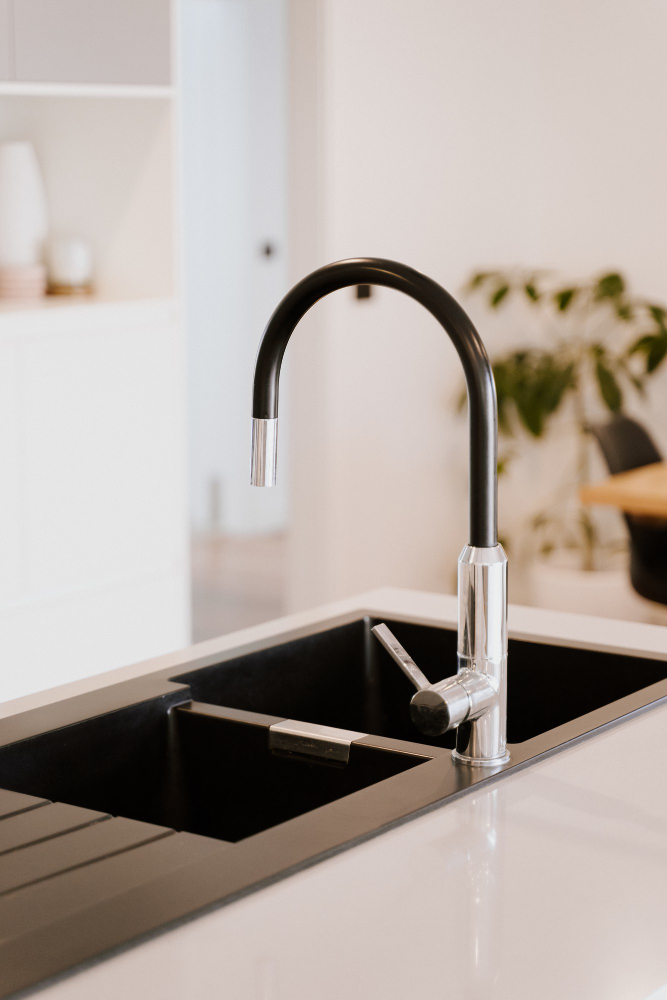
This design includes two sinks in one. A large basin is divided by a partition made from the same material, and each basin often has its own faucet. You can also choose one large basin and one smaller basin for personal use, or one deep basin and another with less depth.
Choosing the sink material
Kitchen sink materials vary in quality, and each material has its own advantages and drawbacks. You can choose one of the following materials according to your needs:
Cast iron sink
This sink is made from cast iron coated with an insulating protective layer. It can come in different colors, and it is more durable and heat-resistant than many other materials. It is also easy to clean. However, its heavy weight means it needs strong supports for proper installation, and the protective layer may be scratched by sharp tools.
Steel sink
Steel is one of the most common sink materials because it is durable, rust-resistant, and lightweight. Steel sinks can be more expensive than other options, but you get a resistant sink that lasts for years without damage. With steel, you get strong resistance to damage, punctures, and scratches, along with reduced water noise while washing.
Ceramic sink
Ceramic sinks are available in many designs and colors. They also withstand high temperatures, so they can be used easily with hot cookware and boiling water. The downside is that they require careful handling because they may be scratched or broken by heavy or sharp tools.
Composite sink
A composite sink is made from a mixture of crushed stone materials and epoxy. The result is a durable sink that resists scratches and heat, and it can be cleaned easily to remove stains that affect its appearance.
Copper sink
This sink stands out with its distinctive, shiny look. More importantly, it has strong resistance to germs and dirt, making it a healthy and practical option at the same time. However, it requires extra care to protect it from corrosion and preserve its appearance through regular cleaning. In the end, choosing the right design and the best material may feel confusing. To make it easier, list your requirements and consult Nano's experts, the leading kitchen design company, to help you get an elegant kitchen sink design.