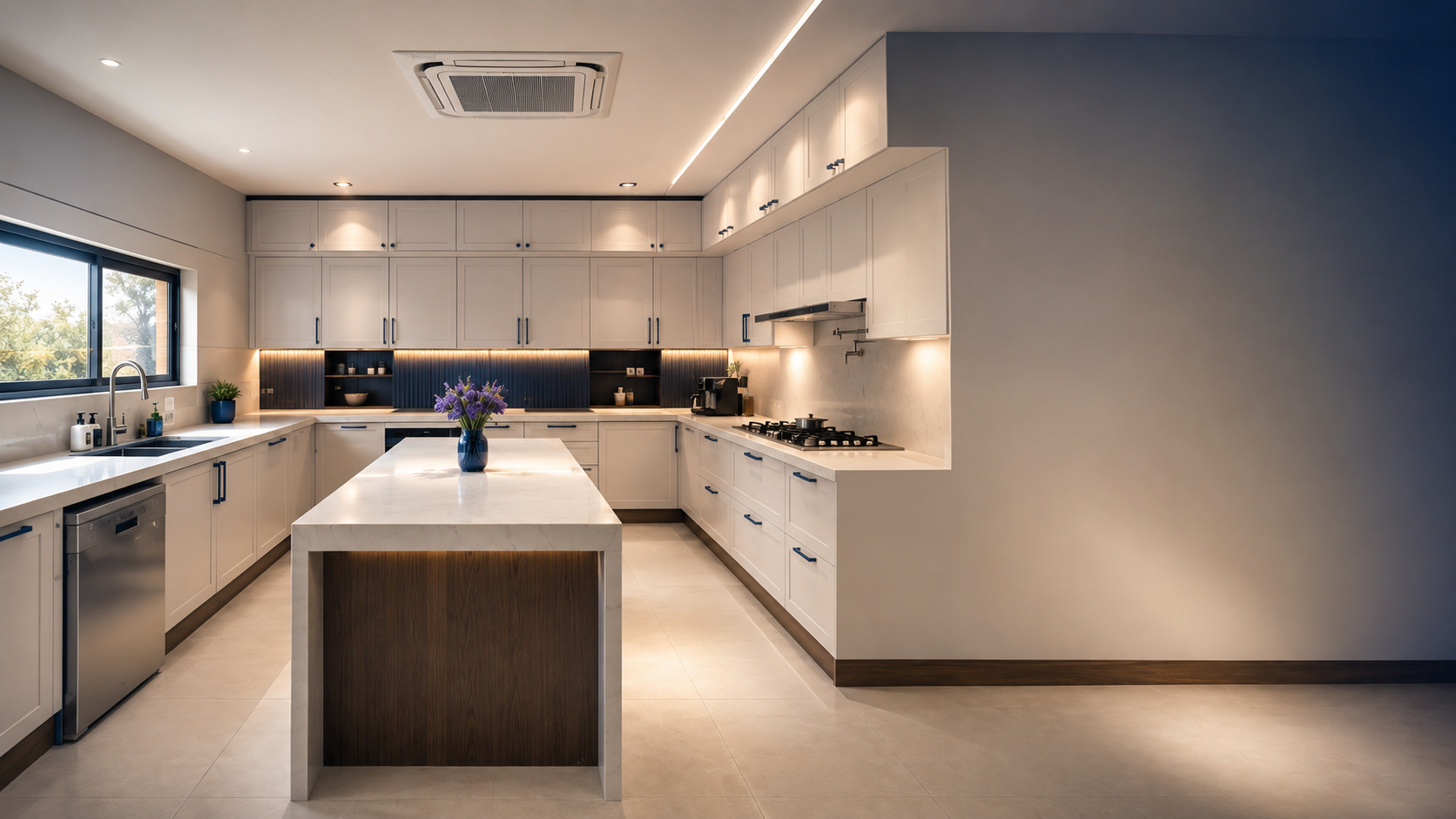


In the past, kitchen design relied mainly on wood, but over time many different kitchen materials began to appear. These materials vary in cost, durability, and appearance. But what makes one material different from another, and how do you know which kitchen material is best for you?
What are the most popular kitchen materials?
There are many types of kitchen materials. Some suit classic designs, while others are better for modern designs. Here are the most common materials used in kitchen design:
Natural wood kitchens
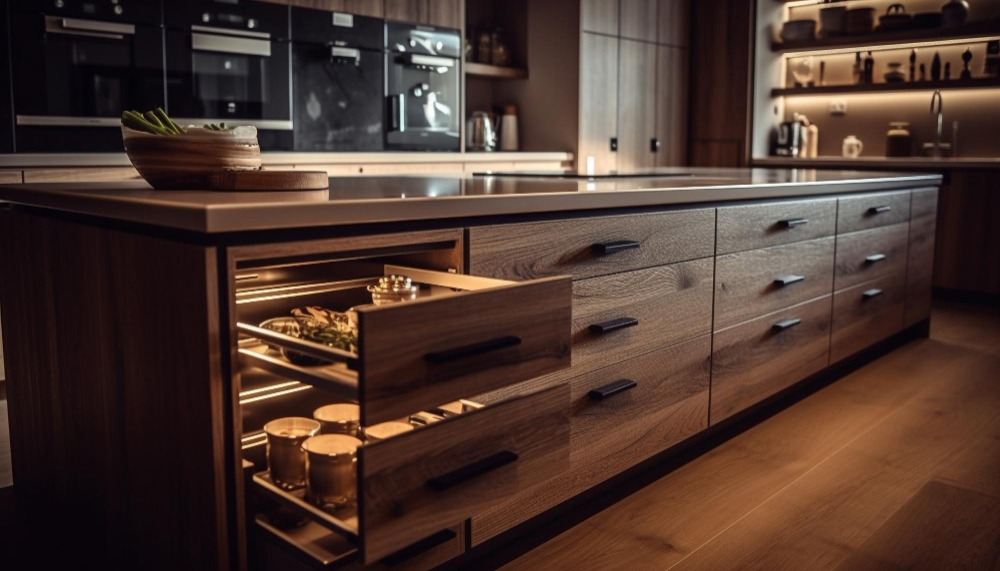
Natural wood is one of the oldest materials used in kitchen design. It is sourced from different types of trees, so it is known for its strength and natural beauty. It also has a relatively long lifespan compared with other materials. However, it is expensive and may not suit limited budgets.
Of course, wood is not one single type. There are many kinds of natural wood, including oak, which is one of the finest and most expensive types because of its hardness and heat resistance, although it is not widely used due to its high price. Beech wood is very hard because it has fewer pores, making it suitable for areas exposed to heavy pressure, such as cabinet bases. Its color ranges between brown and red, and it can be sprayed in colors that suit the design. Teak is also one of the best and most expensive natural woods, with high resistance to heat and humidity, making it a suitable option for kitchens. Swedish wood is not among the best types because it contains pores and gaps that may be affected by moisture, and it has a relatively shorter lifespan, but it can be suitable for lower budgets.
Aluminum kitchens
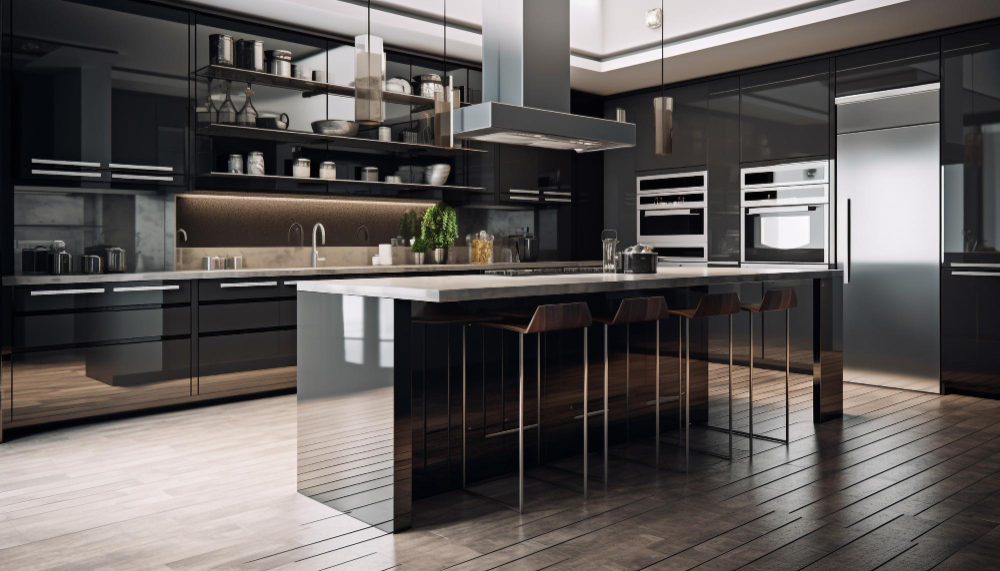
Aluminum kitchens, also known as alumetal kitchens, are modern kitchen materials. They come in a wide range of colors such as red, blue, white, and others. They have a smooth texture that makes cleaning easier, and unlike natural wood, they do not provide a suitable environment for insects.
HPL kitchens
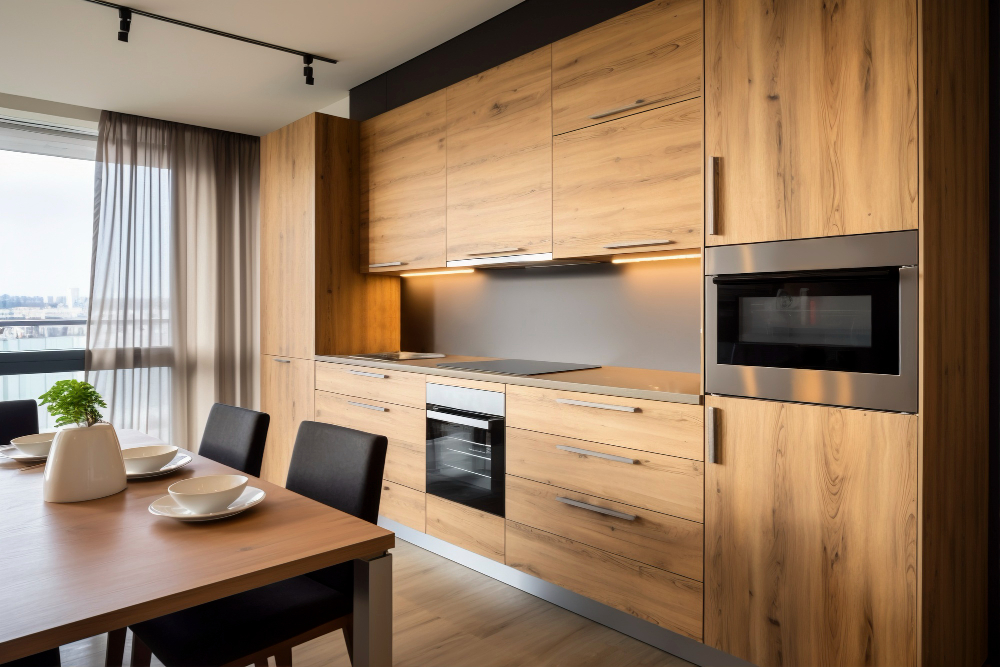
HPL kitchens are made from engineered wood boards exposed to very high pressure, making them resistant to pressure and heat. They are known for their beautiful wood-like colors, which make them resemble natural wood. However, HPL kitchens can have drawbacks, such as being difficult to repair if broken because they are made from large panels.
Lami Gloss kitchens
Lami Gloss boards share several advantages with HPL boards, such as resistance to pressure and heat, but they differ in some ways. For example, Lami Gloss kitchens have a very shiny finish, unlike HPL kitchens, which have matte wood-like colors. The main drawback of Lami Gloss kitchens is that they get dirty quickly and need frequent cleaning.
Poly Lac kitchens
Poly Lac kitchens rank highly for resistance to wear and scratches because they are made from MDF boards with highly resistant polyethylene material. However, they also have several drawbacks, such as poor resistance to high heat and limited color absorption.
How do you choose the kitchen material that suits you?
The right kitchen material depends on your needs and preferences. Some people prefer natural wood because of its durability and suitability for classic decor, while others prefer bright kitchen colors. Start by defining your preferences, then look at the kitchen materials that fit your budget. In reality, choosing the best material on your own can be difficult, especially if you do not have broad experience with kitchen materials and their differences. That is why it is better to work with specialized companies that have strong experience in kitchen design. You can contact Nano's experts now so they can recommend the best kitchen materials for your taste.